
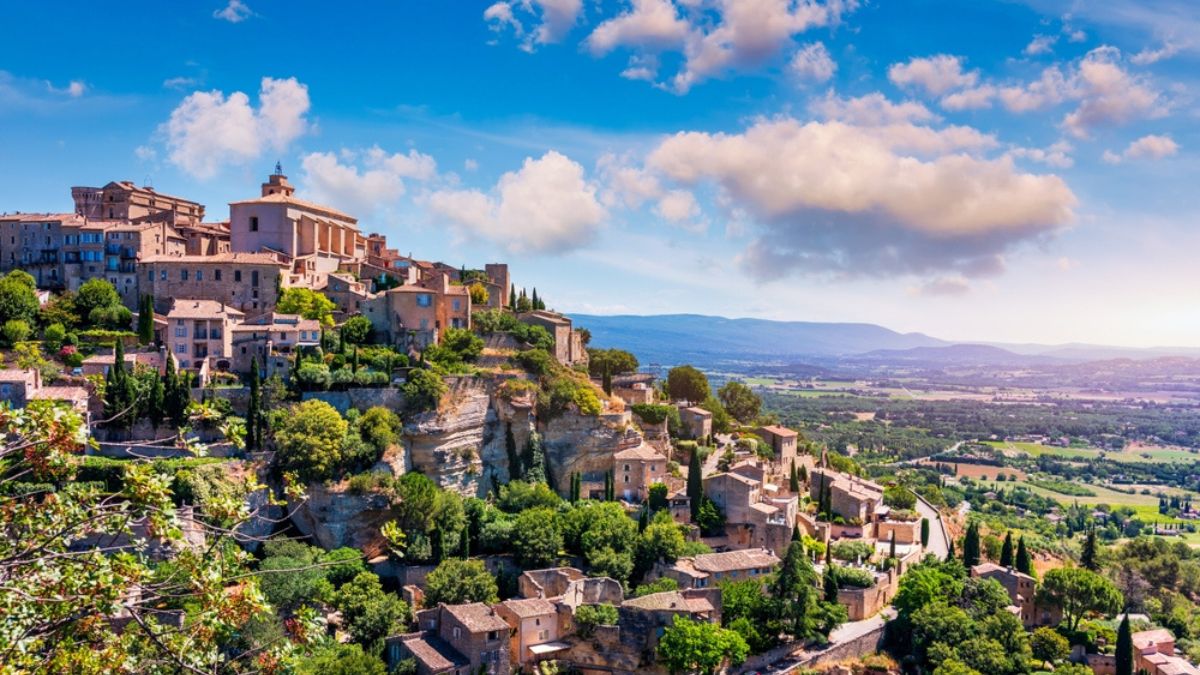
Provence offers lavender fields, hilltop villages, Roman history, vibrant markets, vineyards and dramatic nature, all under some of the most reliable sunshine in France. The top things to do include exploring the Luberon’s perched villages, seeing the lavender on the Valensole plateau, visiting Avignon and the Pont du Gard, wandering the Provencal markets, and marvelling at the Gorges du Verdon. A holiday villa makes the ideal base for combining several of these at your own pace.
This guide walks through the best of Provence by theme, with tips on when to go, how long you need and where to stay.
Explore the hilltop villages of the Luberon
The Luberon is the Provence of postcards: a range of hills scattered with honey-stone villages perched above vineyards and orchards. Gordes tumbles down a hillside in tiers of pale stone, Roussillon glows red and orange thanks to its ochre cliffs, and Menerbes, Bonnieux and Lourmarin each have their own charm, markets and cafes. Driving slowly between them, stopping for a coffee and a wander, is one of the great pleasures of a Provence holiday. Explore the area in our Luberon collection.
See the lavender fields
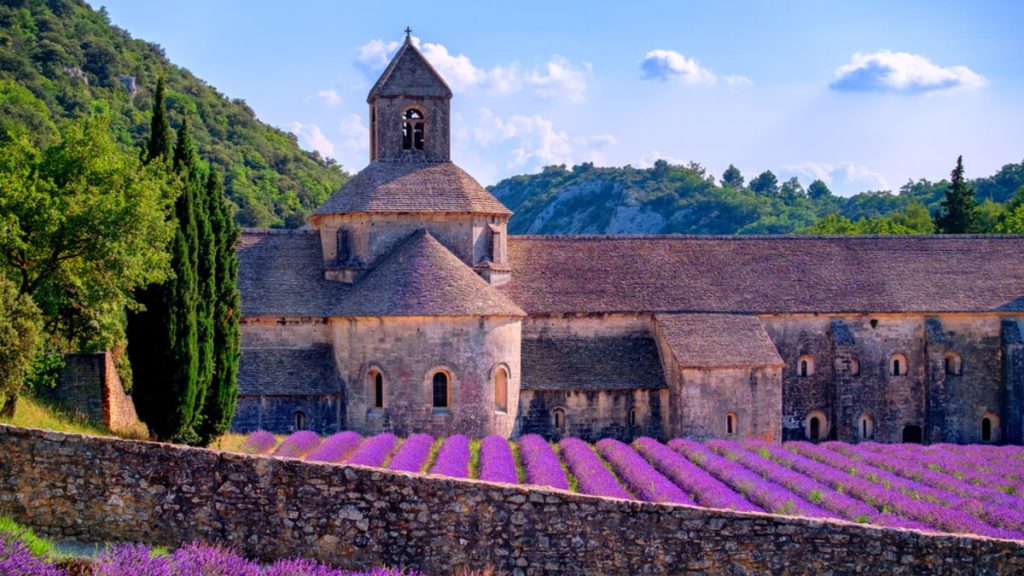
From late June to late July, Provence turns purple. The Plateau de Valensole and the Abbaye de Senanque near Gordes are the most famous places to see the lavender in bloom, with the Sault plateau flowering a little later into August. For exact timing and the best spots, see our dedicated guide to the lavender fields of Provence.
Discover Roman and historic Provence
Provence was one of the most important parts of Roman Gaul, and the legacy is everywhere. Avignon is crowned by the vast Palais des Papes and its famous bridge, Arles inspired Van Gogh and keeps a Roman amphitheatre still used today, Orange has a magnificent Roman theatre, and the Pont du Gard, a towering three-tiered aqueduct, is one of the best-preserved Roman structures anywhere. Together they make a superb cultural thread through any trip.
Wander the markets and taste the food
A Provencal market is an experience in itself, with stalls piled high with olives, cheeses, herbs, fruit, flowers and local crafts. Almost every town has a weekly market, from the grand market of Aix-en-Provence to smaller village gatherings. Pair the produce with the region’s famous rosé wine, its olive oil, tapenade and ratatouille, and you have the essence of Provencal living. Timing a day around a particular market is a lovely way to plan.
Marvel at the Gorges du Verdon
Inland, the Gorges du Verdon is one of the most spectacular natural sights in France, a turquoise canyon up to 700 metres deep. You can paddle into it from the Lac de Sainte-Croix, drive the clifftop rim roads or hike its trails. It pairs naturally with a visit to the nearby lavender fields of Valensole. Read our full guide to the Gorges du Verdon.
Head to the coast and the calanques
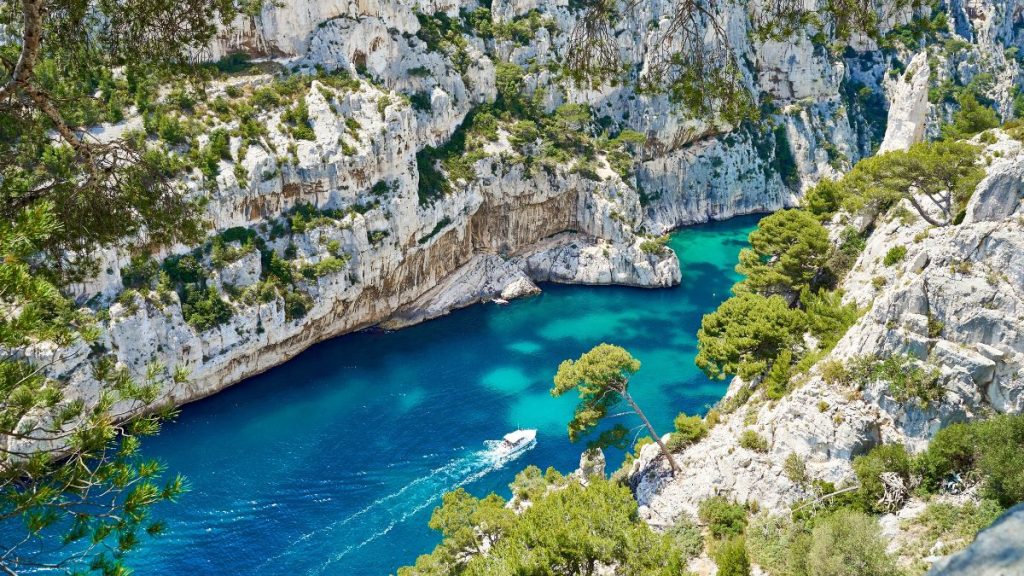
Provence has a coastline too. Near Marseille, the pretty port of Cassis sits beneath towering cliffs and beside the calanques, a series of dramatic limestone inlets with turquoise water, ideal for a boat trip or a swim. Discover it in our guide to Cassis.
Explore the cities of Aix and Marseille
Aix-en-Provence is elegant and relaxed, a city of fountains, leafy boulevards, markets and cafe terraces, forever linked with the painter Cezanne. Marseille, France’s vibrant second city, offers a historic old port, striking modern architecture and a buzzing food scene, and it is the gateway to the calanques. Explore our villas around Aix-en-Provence.
Things to do by interest
Not sure where to start? Match your group to the ideas below.
| If you want… | Head for… |
|---|---|
| Pretty villages and slow travel | The Luberon: Gordes, Roussillon, Lourmarin |
| Lavender and photography | Valensole, Senanque, the Sault road |
| Roman history and culture | Avignon, Nîmes, Arles, Orange, the Pont du Gard |
| Nature and the outdoors | Gorges du Verdon, Mont Ventoux, the calanques |
| Markets, food and wine | Aix, L’Isle-sur-la-Sorgue, village markets |
| Coast and swimming | Cassis and the calanques |
How many days do you need in Provence?
Provence rewards a relaxed pace. As a rough guide:
- A long weekend: base yourself in one area, such as the Luberon, and explore locally.
- One week: combine the Luberon villages, a lavender trip in season, a market day and a Roman site or the coast.
- Two weeks: add the Gorges du Verdon, the coast around Cassis and a city stay in Aix, splitting your time between two or three bases if you like.
When is the best time to visit Provence?
Late spring and early autumn are ideal, with warm, sunny weather and fewer crowds. For lavender, aim for July. Summer is hot and lively but busier, while spring and autumn are perfect for villages, markets and the outdoors. See our month-by-month guide to weather in the South of France to plan your dates.
Where to stay in Provence
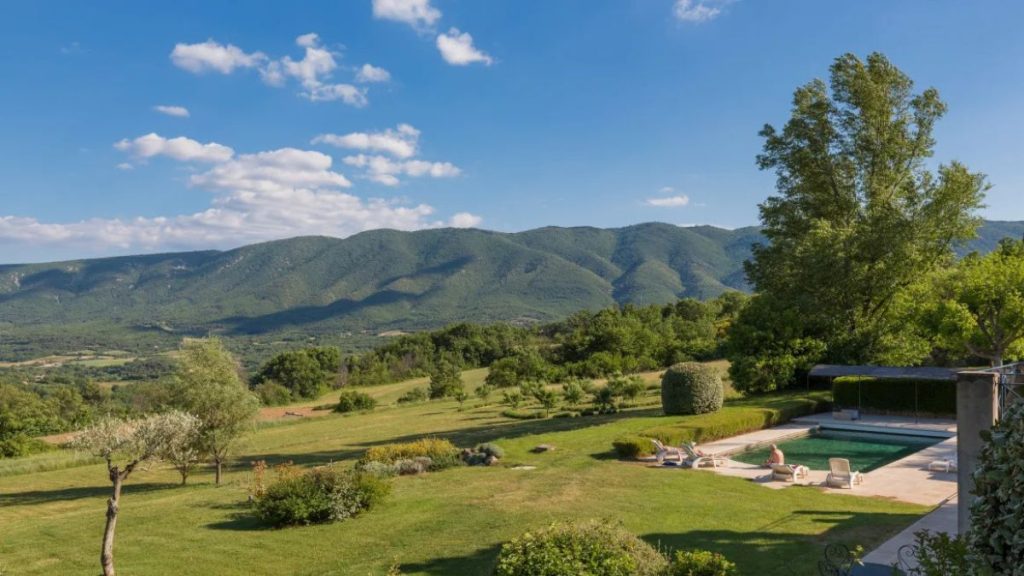
A villa with a private pool is the ideal base, giving you a calm retreat and the freedom to explore at your own pace. Browse our villas across Provence, or check out our villas with private pools.
Provence with children
Provence is a rewarding destination for families. The Gorges du Verdon and the Lac de Sainte-Croix offer swimming and pedalos, the calanques near Cassis are an adventure by boat, and the ochre trails of Roussillon feel like exploring another planet. Markets are a feast for curious young eyes, and many villages have ice cream, squares to run around and easy walks. Provence can be hot in July and August, so a villa with a pool is a real asset for downtime, and planning active mornings followed by relaxed afternoons keeps everyone happy. Our family-friendly villas are chosen with this in mind.
Wine and vineyards in Provence
Provence is the spiritual home of pale, crisp rosé, and touring its vineyards is a highlight in itself. The countryside inland from the coast is lined with estates, many of which welcome visitors for tastings and cellar-door sales, often in beautiful settings among the vineyards. Beyond rosé, the region produces characterful reds, with Bandol and Châteauneuf-du-Pape appellations being some of the most renowned. A vineyard visit pairs perfectly with a market lunch and a village or two, and staying in a villa among the vines is one of the most relaxing ways to experience this side of Provence.
Getting around Provence
A hire car is by far the best way to explore Provence. The villages, lavender fields, vineyards and natural sights are spread across the countryside and are not well served by public transport, so a car gives you the freedom to set your own pace and reach the quieter corners. The main cities, Aix-en-Provence, Avignon and Marseille, are linked by train and have high-speed connections to the rest of France, which is useful if you are arriving without a car, but for a classic villa-and-villages holiday you will want your own wheels. Our guide to airports in the South of France helps you choose where to fly and pick up a car.
How does Provence compare to the French Riviera?
The two regions sit side by side but feel quite different. The French Riviera, or Cote d’Azur, is about glamorous coastal towns, beaches and buzz, from Nice and Cannes to Saint-Tropez. Provence, just inland and to the west, is about villages, lavender, markets, Roman history and a slower pace. Many visitors combine the two, basing themselves in Provence for the countryside and taking day trips or a few nights on the coast. If you are weighing up where to go, our South of France area guide sets out how the regions fit together.
The main areas of Provence
Provence is large and varied, and it helps to picture its main areas before you plan. The Luberon, in the centre, is the classic Provence of perched villages, markets and vineyards. To the west, the Alpilles around Saint-Remy and Les Baux offer olive groves and Roman heritage, while Avignon and the Rhone valley hold the great historic sites. To the east, the Haut-Var rises towards the Gorges du Verdon and the lavender of Valensole. South lies the coast, from Cassis and the calanques to the ports of the Var. Each area suits a slightly different holiday, and many visitors combine two in one trip, which is easy with a car and a central base.
Provence at a glance
| Detail | Information |
|---|---|
| Location | Southeastern France, inland from the Mediterranean |
| Known for | Lavender, hilltop villages, Roman sites, rose wine |
| Main cities | Aix-en-Provence, Avignon, Marseille |
| Nearest airports | Marseille Provence, Nice, Nimes, Montpellier |
| Best for | Villages, culture, markets, nature |
| Best months | May, June and September; July for lavender |
Frequently asked questions
Explore the Luberon’s hilltop villages, see the lavender fields of Valensole and Senanque in July, visit Roman sites like Avignon and the Pont du Gard, wander the markets, marvel at the Gorges du Verdon and discover the coast at Cassis.
Late spring and early autumn offer warm, sunny weather with fewer crowds. July is best for lavender, while summer is hot and lively. Spring and autumn are ideal for villages, markets and the outdoors.
A week lets you enjoy the villages, a lavender trip in season, markets and a Roman site or the coast. Two weeks allows you to add the Gorges du Verdon, the coast around Cassis and a city stay in Aix.
The Luberon is a popular central base for the villages, lavender and markets, while Aix-en-Provence suits those who want a city with easy access to the countryside and coast. A holiday home gives you the most flexibility.
Yes. Provence combines beautiful villages, lavender fields, Roman history, wonderful food and markets, and dramatic nature like the Gorges du Verdon and the calanques, all with reliable sunshine, making it one of France’s finest holiday regions.
Provence is famous for its rosé wine, olive oil, tapenade, ratatouille, herbes de Provence and fresh market produce, along with coastal dishes like bouillabaisse. The weekly markets are the best place to taste and buy the region’s specialities.

