The South of France has a Mediterranean climate: hot, dry summers and mild, relatively sunny winters. Expect highs of 28 to 30 degrees °C in July and August, comfortable 20 to 25 degrees °C in May, June, September and October, and cool but often bright winters around 12 to 15 degrees °C. For warm weather with fewer crowds, the best time to visit is May, June or September.
This guide breaks the year down month by month, with typical temperatures, sea temperatures, sunshine and what to expect, so you can choose the right time for your trip.
The South of France climate explained
The coast from the Camargue to Menton enjoys one of the sunniest climates in France, with well over 2,500 hours of sunshine a year in many spots and up to around 300 sunny days on parts of the French Riviera. Summers are hot and dry, rain is concentrated in short bursts in spring and autumn, and winters are mild by northern European standards.
Two local factors are worth knowing. The first is the Mistral, a cold, dry northerly wind that funnels down the Rhône valley, most often in winter and spring. It clears the sky and can make temperatures feel cooler, especially around Provence and the south-western coast. The second is the difference between the sheltered Riviera around Nice and Menton, which is warmer and more protected by the Alps, and the more exposed Languedoc and Provence coasts further west. These are microclimate nuances rather than dramatic differences, but they matter at the shoulders of the season.
South of France weather month by month
The figures below are typical averages for the coast. Inland and upland areas are cooler, and the Riviera runs a degree or two warmer than the western coast.
| Month | Avg high (deg C) | Avg low (deg C) | Sea temp (deg C) | What to expect |
| January | 12 | 4 | 13 | Cool, often sunny, quiet; occasional Mistral |
| February | 13 | 4 | 13 | Mild bright days, almond blossom, low crowds |
| March | 15 | 6 | 13 | Spring begins, mimosa in bloom, changeable |
| April | 17 | 8 | 14 | Warm afternoons, green landscapes, some showers |
| May | 21 | 12 | 17 | Warm, sunny, excellent for sightseeing |
| June | 25 | 15 | 20 | Hot, dry, long days, sea warming up |
| July | 29 | 18 | 23 | Peak summer heat, busy, minimal rain |
| August | 29 | 18 | 24 | Hottest and busiest, warm sea |
| September | 26 | 15 | 23 | Warm, calmer, warm sea, great value |
| October | 21 | 11 | 20 | Mild, some rain, autumn colour, quiet |
| November | 15 | 7 | 17 | Cooler, wetter, off-season calm |
| December | 12 | 5 | 14 | Cool, crisp, festive markets on the coast |
Season by season
Spring (March to May)
Spring is one of the most attractive times to visit. Temperatures climb from mild to warm, the countryside is green and flowering, and the crowds have not yet arrived. May in particular offers warm, sunny days that are perfect for exploring towns, gardens and coastal paths, though the sea is still on the cool side for long swims.
Summer (June to August)
Summer is hot, dry and reliably sunny, with the warmest sea of the year. It is the classic beach-and-pool season and the liveliest time on the coast, but it is also the busiest and most expensive, and inland towns can feel very hot in the middle of the day. Book accommodation well ahead and plan sightseeing for mornings and evenings.
Autumn (September to October)
Early autumn is a favourite of many seasoned travellers. September keeps summer warmth and a warm sea but with fewer people and better value, while October is mild and atmospheric with the first autumn colour. It is an excellent window for a villa holiday that still allows swimming.
Winter (November to February)
Winter is quiet and mild rather than cold, with plenty of bright days between spells of rain or Mistral. It suits travellers who want culture, festive markets, hiking and a peaceful pace rather than beach weather. Some seasonal businesses close, but the Riviera towns stay lively year-round.
When is the best time to visit the South of France?
The “best” month depends on what you want from your trip:
- For beaches and swimming: July, August and September, when both air and sea are warmest.
- For sightseeing in comfort: May, June, September and early October, warm but not oppressive.
- For value and fewer crowds: late September, October and the spring shoulder months.
- For walking and the outdoors: April, May, September and October.
- For a quiet, cultural break: the winter months, especially around the festive season.
For a broader orientation to the regions and what each offers, see our South of France area guide, and plan your journey with our companion article on airports in the South of France.
Sea temperature and swimming
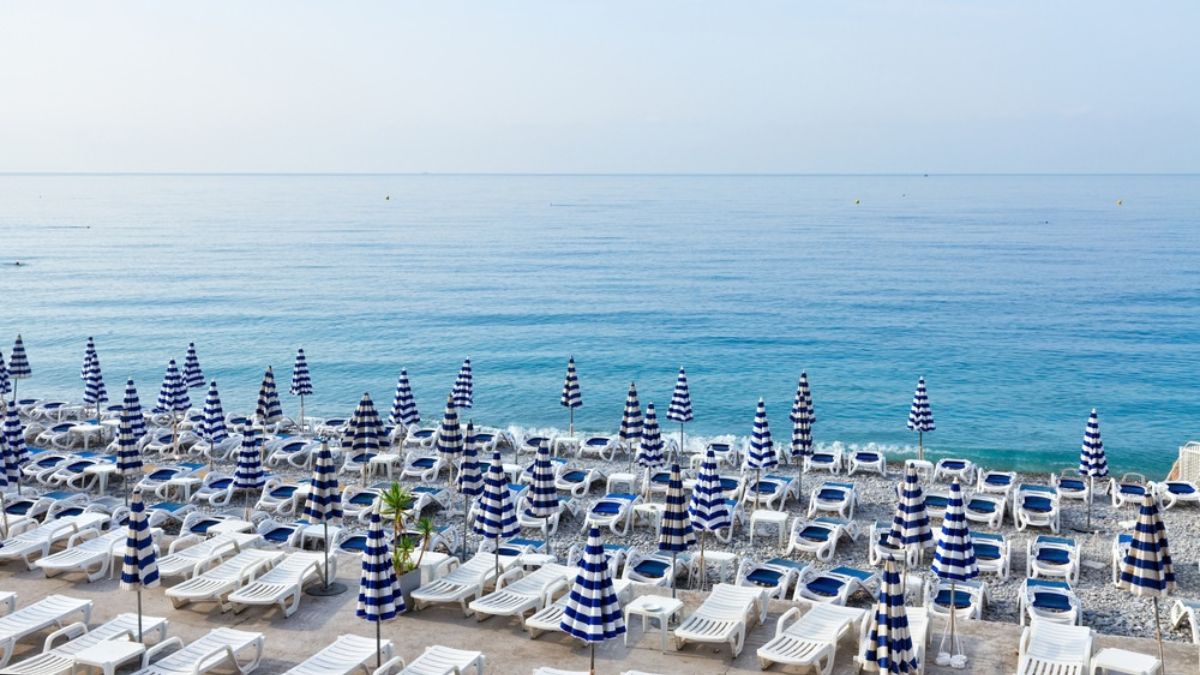
The Mediterranean here is at its most inviting from June to September, peaking around 23 to 24 degrees C in August. May and October are swimmable for the hardier, at roughly 17 to 20 degrees C, while the winter sea sits around 13 to 14 degrees C. If a warm sea is essential to your holiday, aim for July to September and consider a villa with a heated pool for the shoulder months.
What to pack
In summer, pack light, breathable clothing, strong sun protection, a hat and swimwear, plus something a little smarter for evenings out. For spring and autumn, bring layers and a light waterproof for the occasional shower. In winter, add a warm jacket and a windproof layer for Mistral days. Comfortable shoes are essential year-round for the cobbled streets of hilltop villages.
Where to stay for the weather you want
The Côte d’Azur around Nice and Menton is the warmest and most sheltered, ideal for the shoulder seasons. Inland Provence is gloriously sunny but hotter and more exposed to the Mistral in summer. The Languedoc coast offers long sandy beaches and reliable summer sun. Whatever the month, a villa with a private pool extends your swimming season, so browse our private pool villas and our beach-focused collection to match the property to the weather you are chasing.
Regional weather differences along the coast
The South of France is a long coastline, and the weather is not identical from end to end.
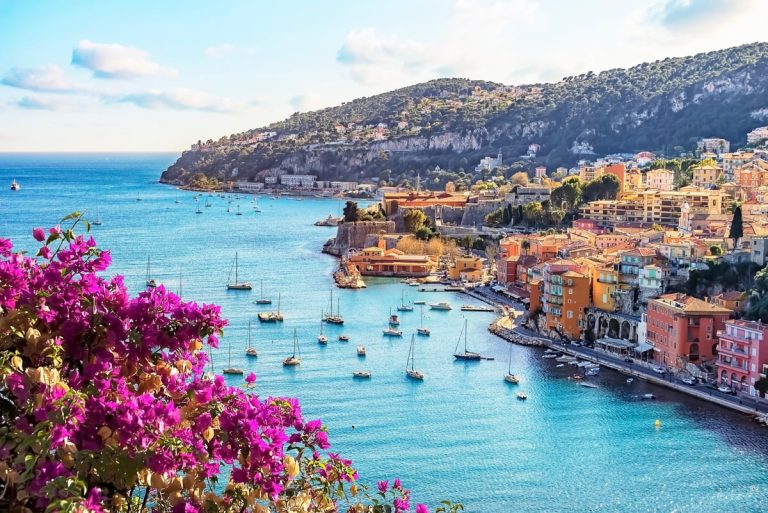
The French Riviera, from Cannes east to Menton, is the warmest and most sheltered stretch, protected by the Alps that rise close behind the shore. Menton in particular enjoys a famous microclimate mild enough to grow lemons and other citrus year-round, and the eastern Riviera holds its warmth later into autumn than anywhere else on the coast.
Provence and the Rhône valley are gloriously sunny but more exposed to the Mistral, which can blow hard in winter and spring and keeps the air dry. Summers inland, around Avignon, Aix and the Luberon, run hotter than on the immediate coast, regularly topping 30 degrees C in July and August, so a pool becomes a real asset.
The Languedoc and Occitanie coast to the west, from the Camargue down to the Spanish border, is a touch breezier and sees slightly more wind than the Riviera, but it shares the same generous sunshine and long, hot summers. Its wide beaches catch the sea breeze, which can make the heat feel more comfortable than in the sheltered interior.

A seasonal calendar of highlights
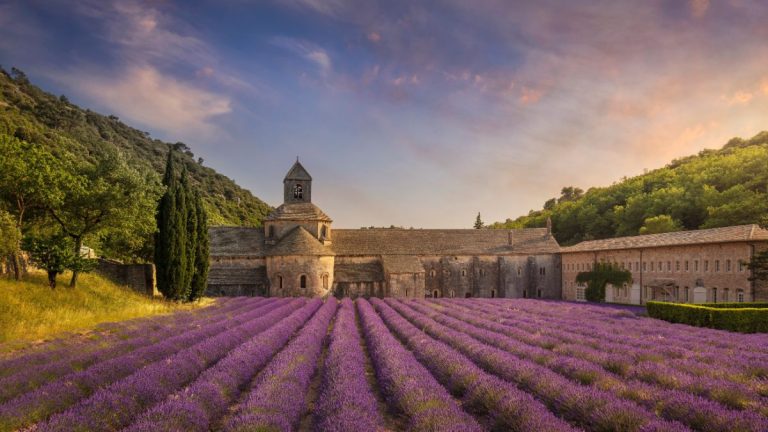
Timing your trip to the season unlocks different experiences. Late winter brings mimosa and almond blossom to the Riviera and the famous Menton Lemon Festival in February. Spring fills the countryside with wildflowers and green hills. Around late June and July, the lavender fields of Provence and the Luberon reach their peak, one of the region’s signature sights. High summer is festival season, with open-air concerts, markets and coastal celebrations, while autumn brings the grape harvest and the first mushrooms and olives. Even the quiet winter months have their appeal, with festive markets along the coast and crisp, clear days ideal for walking. Matching the weather to what you most want to see is the key to choosing your dates.
Weather and choosing your villa
The climate can shape which villa features matter most for your trip. In high summer, when inland temperatures regularly climb above 30 degrees C, shade, air conditioning and a swimming pool move from luxuries to near essentials, especially in Provence and the Languedoc away from the sea breeze. If you are travelling in the cooler shoulder months of spring and autumn, a heated pool lets you keep swimming when the sea has turned chilly, effectively extending your beach-and-pool season by weeks at either end.
Properties with sheltered, sun-trapping terraces are wonderful for those bright but breezy Mistral days, while a covered outdoor dining area comes into its own during the occasional summer shower. Thinking about the season you are travelling in, and choosing a property to match, is one of the simplest ways to make the most of the region’s generous but varied climate.
Frequently asked questions
The South of France has a Mediterranean climate with hot, dry summers around 28 to 30 degrees C and mild winters around 12 to 15 degrees C. It is one of the sunniest parts of the country, with warm, dry summers and short bursts of rain mainly in spring and autumn.
July and August are the hottest months, with average highs of about 29 to 30 degrees C on the coast and warmer still inland. The sea is also at its warmest in August, around 24 degrees C.
May is warm and sunny with highs around 21 degrees C, ideal for sightseeing though the sea is still cool. October is mild at around 21 degrees C early in the month with a warm-ish sea near 20 degrees C, becoming cooler and wetter towards November.
Not often, and rarely for long. Rainfall is concentrated in short, heavy episodes mostly in autumn and spring, while summers are very dry. Overall the region enjoys well over 2,500 hours of sunshine a year in many areas.
The French Mediterranean is comfortably swimmable from June to September, peaking around 23 to 24 degrees C in August. May and October are cooler at roughly 17 to 20 degrees C.
The Mistral is a cold, dry northerly wind that sweeps down the Rhône valley, most common in winter and spring. It brings clear blue skies but can make the air feel noticeably cooler, particularly in Provence and along the western coast.
Source Meteo-France. Figures are typical long-term averages.