The best beaches in the South of France range from the glamorous sands of Pampelonne near Saint-Tropez and the pretty bays of the French Riviera to the long, family-friendly sandy beaches of the Languedoc coast such as Cap d’Agde, Valras and Argelès. As a general rule, the Riviera wins on scenery and beach clubs, while the Languedoc and Occitanie coast wins on sheer sand and space. One important thing to know before you go: many famous Riviera beaches are pebble or shingle rather than sand.
Here is our pick of the finest beaches along the coast, grouped by region, with honest notes on what each is like.
French Riviera beaches (Côte d’Azur)
The eastern coast is the glamorous heart of the French seaside, backed by mountains and dotted with chic resort towns. Just remember that around Nice the beaches are famously pebbly.
Pampelonne, near Saint-Tropez
The most celebrated beach in the South of France, Pampelonne is a five-kilometre sweep of golden sand lined with legendary beach clubs and quieter public stretches alike. It is the place for people-watching, long lunches by the sea and that classic Saint-Tropez glamour, while still leaving room for families away from the clubs. Check out our holiday villas around St Tropez.
Nice
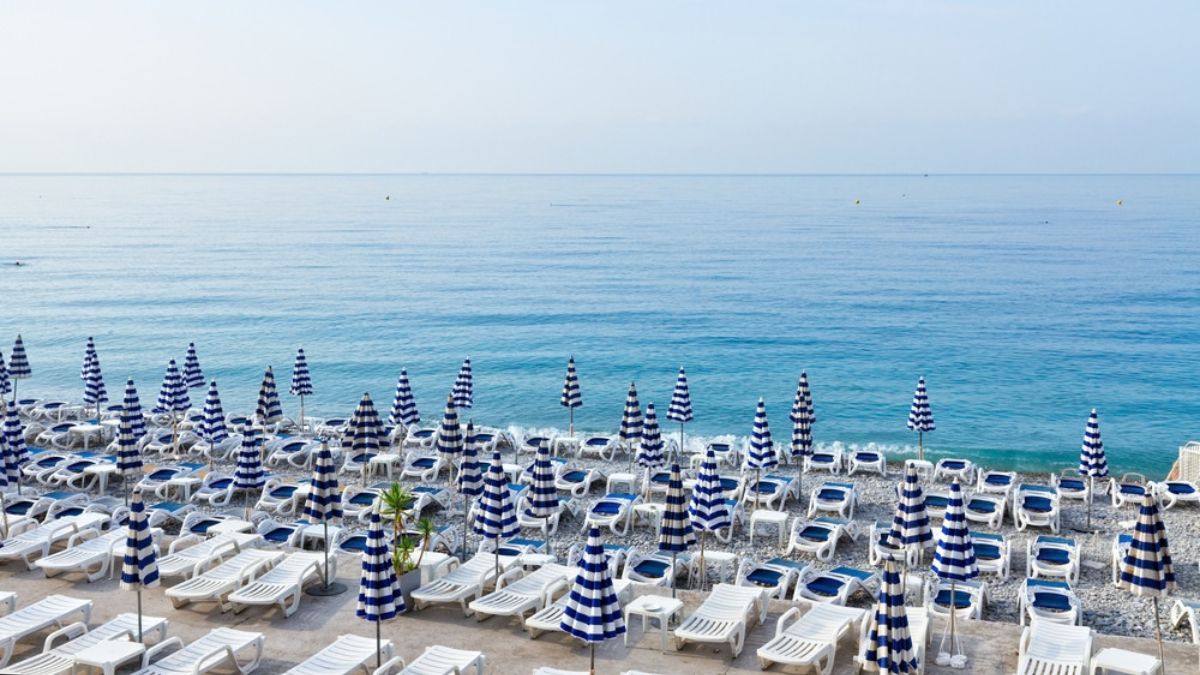
Nice’s beaches run along the Promenade des Anglais in the very centre of the city. They are pebble rather than sand, but the setting is superb, with a mix of free public beaches and comfortable private concessions where you can hire a lounger. Bring beach shoes for comfort on the stones.
Antibes and Juan-les-Pins
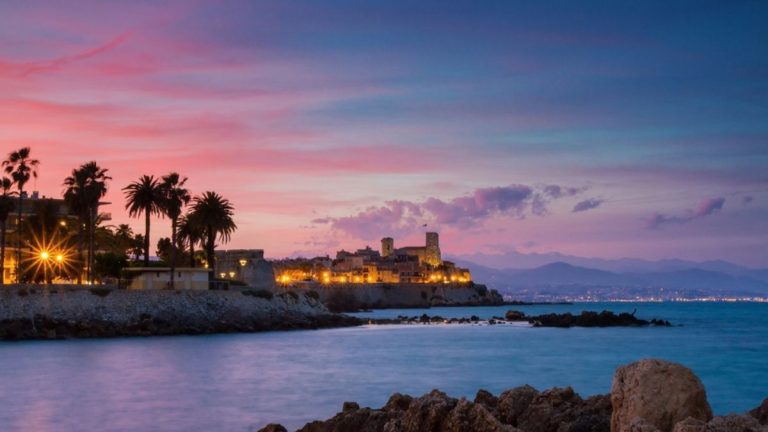
Antibes offers some of the rare sandy beaches on this part of the Riviera, and neighbouring Juan-les-Pins has a lively, pine-fringed bay that is popular with families. Together they are a good choice if soft sand matters to you, but you’re looking for a Riviera holiday.
Cannes
The main La Croisette beaches in Cannes are sandy, split between public areas and the private beaches of the grand hotels. The atmosphere is glamorous and the swimming is gentle, making it an easy, dressed-up day by the sea.
Villefranche-sur-Mer and Menton
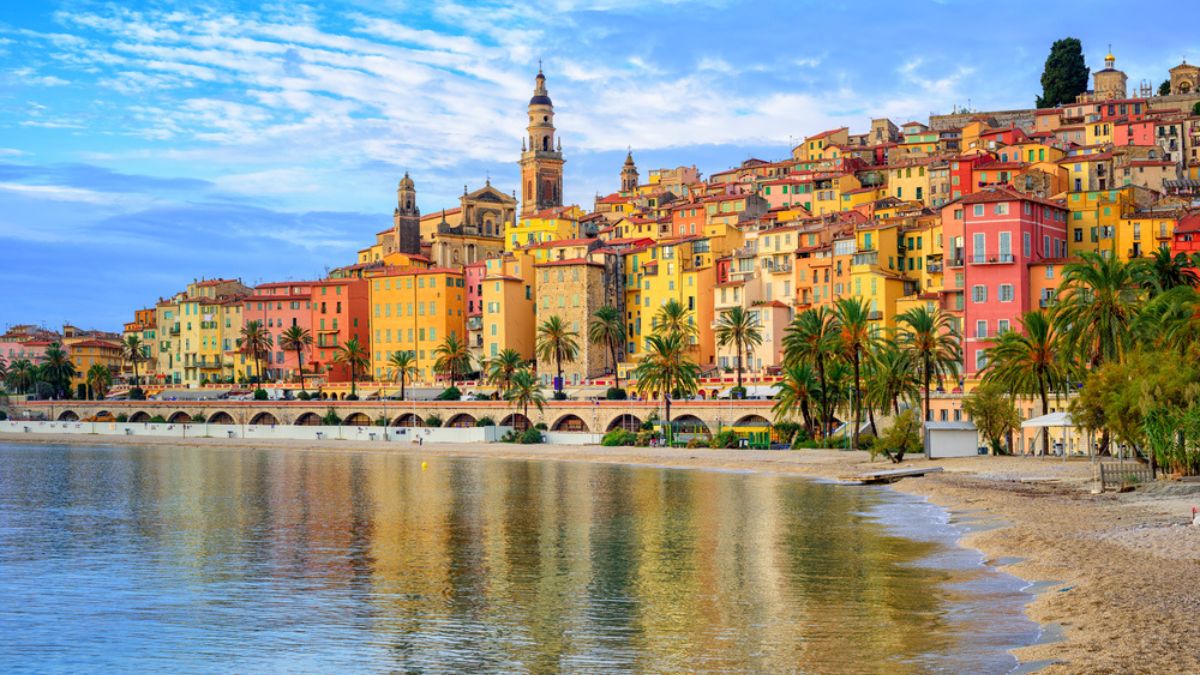
Villefranche has a sheltered, horseshoe-shaped bay with a sandy-to-shingle beach and calm water, ideal for swimming. Further east, Menton on the Italian border has pebble beaches, a gentle microclimate and a relaxed, less crowded feel.
Languedoc and Occitanie beaches
Head west and the coast opens out into kilometre after kilometre of wide, sandy, gently shelving beaches, generally less expensive and more family-oriented than the Riviera.
Cap d’Agde
One of the biggest resorts on the coast, Cap d’Agde has extensive sandy beaches, shallow water and every family facility you could want. It is a natural base for a beach holiday in the western Languedoc, and you can read more in our guide to Cap d’Agde.
Valras-Plage
A traditional French seaside resort with a long, Blue Flag sandy beach, a promenade and a friendly, unpretentious atmosphere. Valras is a firm favourite with families.
Gruissan
Famous for its beach huts on stilts (as seen in the film “Betty Blue”), Gruissan combines a huge sandy beach with a characterful old village and a salt-marsh landscape. It is one of the most distinctive spots on the coast.
Argelès-sur-Mer and the Côte Vermeille
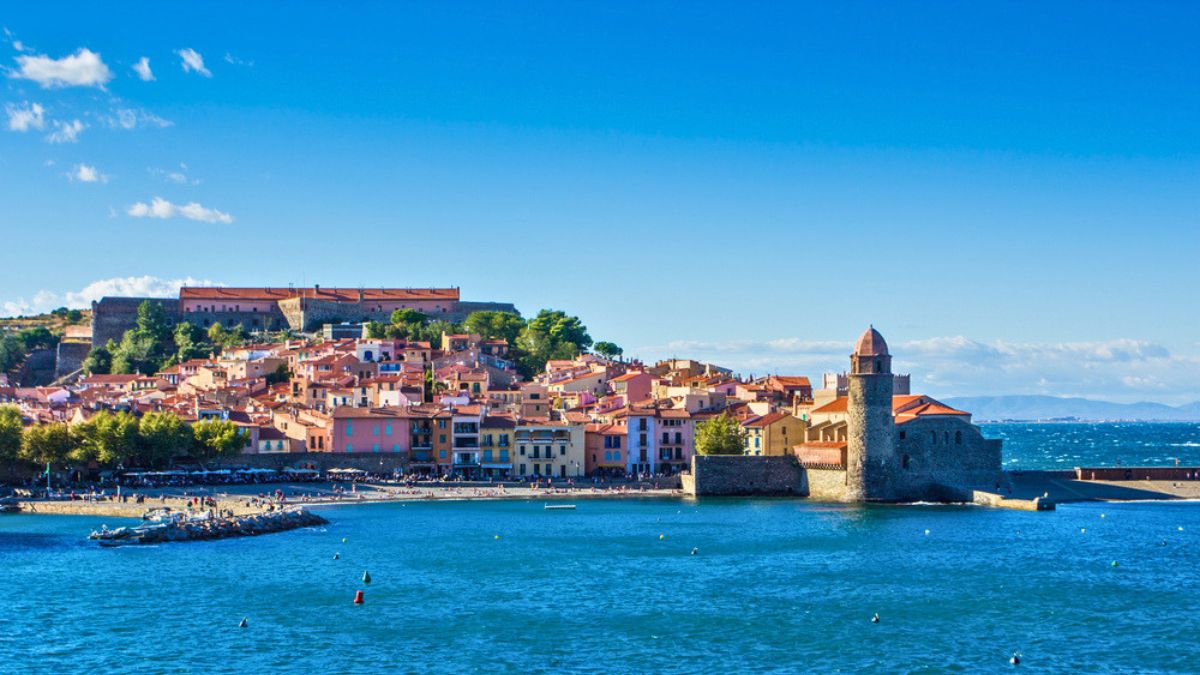
Towards the Spanish border, Argelès has a long sandy beach and a lively resort, while nearby Collioure offers smaller pebble coves beneath a picturesque harbour town much loved by artists. This is where the sandy plains give way to the rocky Côte Vermeille and Pyrenees mountains.
Sète
Built between the sea and a lagoon, Sète has long sandy beaches on its narrow spit of land, a working fishing port and a vibrant food scene. It pairs a proper beach holiday with plenty of character.
Provence beaches and the Calanques
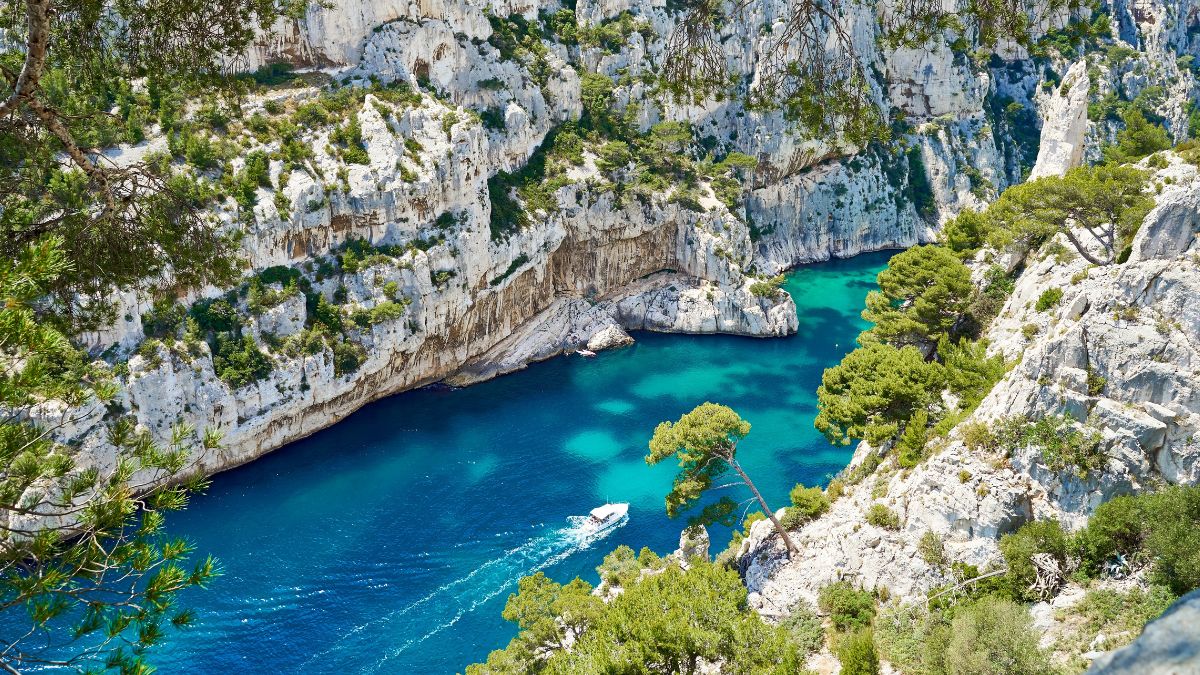
Between the Riviera and the Languedoc, the Provençal coast is more about dramatic scenery than long sands. Around Cassis and Marseille, the Calanques are stunning limestone inlets with turquoise water, reached on foot or by boat, offering some of the most beautiful swimming spots in the country, if not the easiest to access. The beaches here are often small pebble or rock coves rather than broad sand.
Sandy or pebble? A quick comparison
Knowing what lies underfoot helps you pick the right beach. Here is a simple guide.
| Beach / area | Region | Sand or pebble | Best for |
|---|---|---|---|
| Pampelonne (St-Tropez) | Riviera (Var) | Sand | Glamour, beach clubs, families |
| Nice | Riviera | Pebble | City-centre convenience, scenery |
| Antibes / Juan-les-Pins | Riviera | Sand | Families wanting soft sand |
| Cannes (La Croisette) | Riviera | Sand | Dressed-up beach days |
| Cap d’Agde | Languedoc | Sand | Big family beach holiday |
| Valras-Plage | Languedoc | Sand | Blue Flag, relaxed family resort |
| Gruissan | Languedoc | Sand | Scenery and character |
| Collioure | Roussillon | Pebble | Pretty coves, art and charm |
| Calanques (Cassis) | Provence | Pebble / rock | Dramatic swimming spots |
Best beaches for different holidays
- For families: Cap d’Agde, Valras-Plage, Antibes and Juan-les-Pins, with sand and shallow water. Match one with a family-friendly villa.
- For glamour and beach clubs: Pampelonne near Saint-Tropez and La Croisette in Cannes.
- For scenery and swimming: the Calanques near Cassis and the bay of Villefranche-sur-Mer.
- For long sandy walks: the wide Languedoc beaches from Montpellier to Argelès.
- For charm and character: Antibes, Menton, Collioure, Gruissan and Sète.
More beaches worth seeking out
Beyond the headline names, the coast hides plenty of rewarding alternatives. Villefranche-sur-Mer, just east of Nice, has one of the most sheltered and swimmable bays on the Riviera, a curve of sand-and-shingle backed by a colourful old town. The Îles d’Hyères, especially car-free Porquerolles, offer some of the most beautiful and unspoilt beaches in the whole of France, with fine white sand and clear water reached by a short boat trip from the Var coast. In the Camargue, the wild, wind-swept beaches around Saintes-Maries-de-la-Mer stretch for miles beside flamingo-filled lagoons, perfect for those who like their coast big, natural and uncommercialised. And near Montpellier, the traditional resort of Palavas-les-Flots gives an easy, sandy, family-friendly day by the sea close to the city.
One practical note on Cap d’Agde: as well as its large mainstream family beaches, it is home to one of Europe’s best-known naturist quarters, which is entirely separate and clearly signposted, so families and naturists alike know exactly where to head.
Getting to the beaches
How you reach the sand depends on where you are based. On the Riviera, many beaches sit right in the heart of towns like Nice, Cannes and Menton, so they are walkable or a short bus or train ride away, though parking near the most famous beaches is scarce in summer. The wilder and more scenic spots, such as the Calanques near Cassis or the beaches of Porquerolles, often require a walk, a boat or a combination of the two, which is part of what keeps them beautiful. Along the Languedoc coast, a car is the easiest way to move between the long resort beaches. Wherever you are heading in high season, arriving early secures both a parking space and a good patch of sand.
Blue Flag beaches and practical tips
The South of France has many Blue Flag beaches, an international award for water quality, safety and facilities, which is a reliable sign of a well-run beach with good swimming. In July and August the most famous beaches fill quickly, so arrive early, especially where parking is limited. Bring beach shoes for the pebble beaches of the Riviera, check whether a beach is public or a paid private concession, and note that many resort beaches have lifeguards in summer while wilder coves do not.
When to go and beach safety
The beach season runs broadly from June to September, when the sea is warm enough for easy swimming, peaking in August. July and August are the busiest and hottest months, while June and September offer warm water with more room on the sand and better value. May and October suit those happy with a cooler sea and a quieter coast. Many resort beaches are staffed by lifeguards in the summer season and use a coloured flag system: green means safe to swim, orange or yellow means caution, and red means swimming is prohibited, often because of strong currents or high waves stirred up by the wind. Quieter coves and wild beaches usually have no lifeguard, so take extra care there, keep an eye on children, and be aware that the Mediterranean, though generally calm, can develop a surprising swell on windy days. A little sun sense goes a long way too: the midday sun here is strong, so seek shade in the middle of the day and reapply sun cream after swimming.
Where to stay for beach holidays
To make the most of the coast, base yourself within easy reach of the sand. Our beach villas collection gather properties close to the water across every region, from Riviera bays to Languedoc resorts. For a wider view of the eastern coast, browse the Côte d’Azur. Or upgrade your stay with a holiday villa with private pool.
Frequently asked questions
The best long sandy beaches are on the Languedoc and Occitanie coast, including Cap d’Agde, Valras-Plage, Gruissan and Argelès-sur-Mer. On the Riviera, Pampelonne near Saint-Tropez, Cannes and Antibes offer sand, while many other Riviera beaches are pebble.
Both. The French Riviera around Nice is largely pebble, with sandy exceptions at Antibes, Cannes and Saint-Tropez. The Languedoc coast to the west is almost entirely long sandy beaches, which is why it is popular with families.
Pampelonne near Saint-Tropez is the most famous, thanks to its golden sand and beach clubs. For a beautiful setting and calm swimming, the bay of Villefranche-sur-Mer is a strong alternative, while Antibes offers the best soft sand near Nice.
The wide, gently shelving sandy beaches of the Languedoc, such as Cap d’Agde and Valras-Plage, are ideal for families, as are Antibes and Juan-les-Pins on the Riviera. Look for Blue Flag beaches with lifeguards in summer.
Yes, many. The Blue Flag is awarded for water quality, safety and facilities, and the region has numerous Blue Flag beaches along both the Riviera and the Languedoc coast, a good marker of a well-managed beach.